Command Centre / Press Room / Communications
CommunicationsWednesday, 13 May 2026 · 5 min read
FROM KAMPALA TO THE REGION: MUSEVENI’S SEVENTH TERM DRAWS GLOBAL ATTENTION
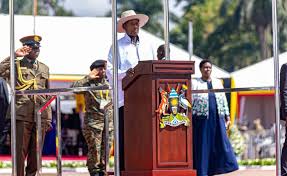
Under the bright skies of Kampala, the swearing-in ceremony of President Yoweri Kaguta Museveni at Kololo Ceremonial Grounds unfolded as a grand display of patriotism, military precision and national pride. This historic occasion brought together thousands of Ugandans, foreign dignitaries, diplomats and Heads of State from across Africa and beyond, gathered to witness another defining moment in Uganda’s political journey.
Kololo Ceremonial Grounds were transformed into a spectacular sea of national colors, beautifully decorated pavilions, cultural performances and well-organized ceremonial formations. The highlight was the powerful artillery display by the Uganda People’s Defence Forces and the thunderous ceremonial gun salute that echoed across Kampala symbolizing State authority, stability and continuity.
As Yoweri Kaguta Museveni took oath of office for the seventh term, the crowds erupted into cheer, making it a moment layered with symbolism, regional diplomacy, strategic alliances and the shifting geopolitics of East Africa and the Great Lakes Region.
For nearly four decades, Museveni has remained one of Africa’s most consequential political figures, a leader whose influence stretches far beyond Uganda’s borders. This inauguration, therefore, becomes not only a celebration of continuity in Uganda but also a gathering of over 10 Presidents, former presidents, Vice Presidents, Prime Ministers, Secretary Generals of various political parties across the world and investors keenly aware of Uganda’s growing strategic importance.
After his speech, Museveni invited the President of Burundi to speak. In his speech at Kololo, H.E. Ndayishimiye was grateful towards Museveni’s contribution in the restoration of peace in Burundi, showing his invaluable importance within the region. “At a critical moment in our history, your leadership, wisdom and commitment played a decisive role in supporting dialogue, reconciliation and stability,” he said.
The presence of Nick Checker, the Senior Bureau Official leading the Department of State’s Bureau of African Affairs, representing President Donald Trump carried diplomatic and geopolitical meaning for both Uganda and the United States. The US could have sent only its Ambassador in Kampala, but sending a senior Africa policy official signals that Donald Trump’s administration considers Uganda strategically important in East Africa.
Museveni’s ability to maintain relations with western partners, such as the European Union and the United States, while also deepening engagements with other global powers including China, Russia, Türkiye and Gulf States must, therefore, be commended.
This multi-directional diplomacy reflects President Museveni’s long-held philosophy of strategic independence. He has consistently advocated for African self-reliance, Pan-African integration and economic transformation driven by infrastructure and industrialization rather than dependence on aid.
Messages of congratulations and solidarity poured in from fellow Heads of State, many who view Museveni as both a revolutionary contemporary and an elder statesman.
Many leaders gathered in Kampala understand that Uganda’s stability matters to the entire region and Uganda’s open refugee policy has also earned her international recognition, while simultaneously increasing the country’s significancy.
The geopolitics surrounding President Museveni today are far more complex than they were in the 1990 or early 2000. Uganda now sits at the center of Africa’s most strategic economic transitions. The discovery of commercial oil reserves in the Albertine region has transformed Uganda into an emerging energy frontier. Global powers increasingly view Uganda through the lens of energy security, infrastructure development and regional influence.
The development of the East African Crude Oil Pipeline has brought Uganda into intense international focus. The project has deepened Uganda’s strategic relationships with countries seeking partnerships and investment opportunities. The project has strengthened our ties with Tanzania while positioning Uganda as a future energy exporter.
When he took to the podium, the newly sworn-in President Museveni highlighted Uganda’s transformation in real estate, the UPDF might, infrastructure and socioeconomic transformation. “This kisanja should be regarded as a kisanja no sleep for all Ugandans,” President Museveni said. He urged Ugandans to work hard and get out of poverty.
President Museveni reiterated his message about the importance of value addition to raw materials. “In Uganda we are always talking about the importance of value addition. With the presence of so many African brothers and sisters and friends from outside Africa, I cannot fail to point out the strategic mistakes many of the African ruling elites have been making for the last 70 years, ever since the independence of Sudan (Khartoum) in 1955. This is the mistake of exporting unprocessed or semi-processed raw materials of minerals, agricultural products etc to foreign countries,” he emphasized.
He also particularly thanked Tanzania, Kenya and Mozambique for playing a key role in laying a foundation in the present Ugandan army. He also thanked the Heads of State and Government present for showing solidarity with Uganda.
President Museveni’s regional mediation efforts and economic diplomacy have made Kampala an important center of political gravity in Africa. To many western and African governments, Kampala is not just another capital city but rather a strategic security partner in a region threatened by terrorism, armed insurgence, influx of refugees and cross-border instability. Security cooperation remains a defining pillar of Museveni’s continental relationships. Uganda’s role in combating extremist groups such as Al-Shabaab has elevated our standing among global security partners. The Uganda Peoples Defence Forces have earned a reputation as one of the regions most experienced militaries, giving Kampala additional strategic leverage in regional affairs. Its participation in stabilization missions in Somalia, South Sudan and the Eastern Democratic Republic of Congo has elevated Uganda’s geopolitical relevance.
At home, supporters credit Museveni with stabilizing Uganda after years of turmoil and overseeing major expansion of infrastructure, education, telecommunication and regional trade. President Museveni has also overseen economic reforms, microeconomic stability and ambitious industrialization plans as evidence of long-term national transformation.
As the military bands played, Ugandan flags waving across Kampala, the symbolism of this 7th inauguration extended far beyond ceremony. It reflected the endurance of a leader who has outlasted generations of political change while adapting to evolving regional and global realities.
For Uganda’s allies, the inauguration signaled continuity in security cooperation, trade and regional diplomacy. For investors, it represents policy predictability at a time when East Africa is emerging as one of the continent’s promising economic regions.
For Africa, President Museveni’s seventh term underscores a broader continental conversation about leadership, sovereignty, economic transformation and the future of regional integration in an increasingly competitive global order.
The Writer works for Uganda Media Centre