Command Centre / Press Room / Foreign Affairs
Foreign AffairsSaturday, 22 August 2026 · 4 min read
UGANDA /TANZANIA ENERGY DEALS; MUSEVENI PUSHES EAC INTEGRATION INTO OVERDRIVE
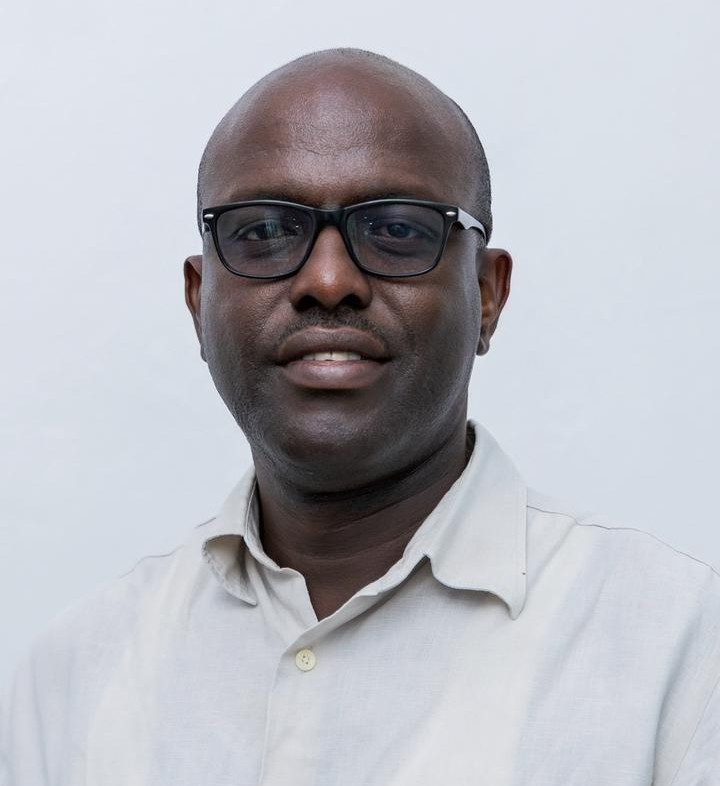
By Obed K. Katureebe
In the whole of Africa, to the informed senior citizens, everybody knows that President Yoweri Museveni is so passionate about the integration of the African continent if we are to survive in this crudely competitive capitalist world order. In his view, the USA was able to develop into a super industrial country it is because of integrating that big market called the United States of America.
To him his views are that political and economic integration are existential and historical necessity for Africa. He argues that a united continent is required to guarantee long-term prosperity, strategic security, and global competitiveness against major powers like China, the US, Russia, and India
He has equally urged that Europeans have moved faster by integrating and forming the EU. And because of that Europe benefits from the world’s largest single market enabling free movement of goods, services, and people, a shared euro currency used across 21 countries, border-free travel via and strong collective global trade power.
To achieve that President Museveni has pledged to spare no effort as he fights for the integration of the African continent. To achieve this, he has argued that regional blocks on the African continent like the EAC, SADC, ECOWAS, the MAGRID must first integrate. That is the very reason he has embarked on the integration of the East African Countries through economic cooperation.
Therefore, on August 6, 2026, Uganda and Tanzania signed a landmark memorandum of understanding in Dar es Salaam to jointly develop the Tanga Regional Energy Hub. This was witnessed by President Yoweri Museveni and President Samia Suluhu Hassan, the deal involves the Uganda National Oil Company (UNOC), the Tanzania Petroleum Development Corporation (TPDC), and global energy trader Vitol Bahrain E.C.
More memorandums of understanding were signed for bilateral energy cooperation beyond the ongoing East African Crude Oil Pipeline (EACOP) into petroleum refining, bulk storage, logistics, and a bidirectional multiproduct pipeline linking Tanga and Uganda. These projects are projected to attract over $20 billion in total integrated energy infrastructure investments.
Not so long ago the government of Uganda, through Uganda National Oil Company (UNOC), acquired a 20.15% strategic stake in Kenya Pipeline Company (KPC) for 9 Kenyan shillings per share. This acquisition was finalized during KPC’s initial public offering and subsequent listing on the National Securities Exchange. Such joint investments and partnerships Are the only sure way of integrating the region. This is because countries begin sharing visions, opportunities, employment, sharing of skills and common markets. Economic integration such as free trade areas, customs unions, and common markets—guarantees regional security through the democratic peace theory, interdependence, and institutional binding, making the cost of conflict higher than cooperation by intertwining national economies and creating shared security stakes. ________________________________________
President Museveni has not only championed economic integration in the East African region but has also championed security cooperation. The East African Standby Force is one of the products of this effort. Its main achievements include establishing a 5,000 strong ready force, conducting continuous readiness and verification exercises, and strengthening regional disaster and humanitarian response frameworks. Uganda and DR Congo are jointly pursuing the terrorists of the Allied Democratic Forces (ADF) in the Eastern DR Congo. Because of the great job the UPDF is doing in stabilizing the Eastern DR Congo, the government of DR Congo few days ago was kind enough to donate brand new pickup trucks to the UPDF to ease their movements while guaranteeing peace to their citizens. This gesture further shows how appreciative the government in Kinshasa to Uganda’s magnanimity in securing their people. In equal measure, Uganda has deployed the Uganda Peoples Defense Force (UPDF) in South Sudan and Somalia to nurture those young regimes as they consolidate their security and be able to stand by their own. The East African countries are sharing both economic and security intelligence within their borders. This as a result has curtailed the proliferation of terrorist groups that were coming up in the past years. Nairobi, Dar es Salaam and Kampala were devastatingly attacked by the Al Shabaab terrorists in 1998 and 2010 respectively. As a result, president Yoweri Museveni has come out with his theory, the African Strategic Security. In this, he has argued as the ultimate capacity of a nation or continent to safeguard its survival, defend itself against all external and internal threats across land, air, sea, and space, and protect its long-term socio-economic prosperity. Therefore, as President Museveni pushes down his 7th term in office, it is not being speculative that finally the integration of East Africa is being realized in this Kisanja. One of the reasons Museveni has given to being a little longer in office is to achieve the East African integration. It is no wonder therefore that these landmark economic and security partnerships championed by president Museveni among members are being achieved.
The writer works with Uganda Media Centre